Selling food online is now part of everyday business for many food operators. Whether you’re a home baker taking orders through Instagram or WhatsApp, or a takeaway offering delivery through your website or an app. You have a responsibility when it comes to allergen information for selling food online.
I see this a lot, especially with smaller food businesses. It can feel confusing, particularly when you’re selling in different ways. But once you understand what’s required, it becomes much easier to manage with confidence.
Here are 8 key things you need to know.
1. Selling online removes an important safety check
When a customer orders food in person, they can ask questions straight away.
They might ask:
- “Does this contain peanuts?”
- “Can this be made without milk?”
- “Is there a risk of cross-contamination?”
When food is sold online or by phone, that immediate interaction isn’t there.
This is known as distance selling, which simply means selling food without face-to-face contact. This includes:
- Orders placed through your website or app
- Orders taken over the phone
- Sales through social media platforms such as Instagram or Facebook
- Food sold via third-party delivery platforms
- Online marketplaces such as eBay or Etsy
Because that “in the moment” conversation is removed, the responsibility sits with you to make sure allergen information is clear, accurate and easy to access.
2. You must provide allergen information at two key stages
This is one of the most important things to get right.
When selling food online or by phone, allergen information must be provided at two stages:
Before the order is completed
Customers must be able to access allergen information before they place their order.
This could be:
- On your website or app
- On an online menu
- Shared via WhatsApp or messaging
- Provided over the phone
At the point of delivery or collection
Allergen information must be provided again when the food is delivered.
This could be:
- In writing, for example on labels, packaging or receipts
- Verbally, if the food is handed over directly
In practice, written information is much more reliable. It reduces the risk of miscommunication and gives the customer something they can refer back to. The Food Standards Agency’s advice is that food businesses providing food for delivery or takeaway should make the allergen information available in writing both before the food is ordered and when it is delivered.
3. The type of food you sell affects how you provide information
One of the reasons this topic can feel confusing is that the requirements change depending on the type of food.
There are two main categories to be aware of:
Prepacked food
This is food that is packaged before it is offered for sale.
For prepacked food:
- Customers must be able to see full allergen information before purchase
- The packaging must include a full ingredients list
- Allergens must be clearly emphasised within that list, usually in bold
Non-prepacked food
This includes food made to order, such as:
- Takeaway meals
- Cakes made to order
For non-prepacked food:
- You do not need to provide a full ingredients list
- But you must clearly state which of the 14 allergens are present
- This information must still be provided before a customer orders and again at delivery
4. You still need to declare the 14 allergens every time
By law, you must inform customers if any of the 14 named allergens are present in your food.
These are:
Celery; cereals containing gluten such as wheat, rye and barley; crustaceans; eggs; fish; lupin; milk; molluscs; mustard; peanuts; sesame; soybeans; sulphur dioxide and sulphites (above 10 parts per million); and tree nuts such as almonds, hazelnuts, walnuts and cashews.
Even if something feels obvious, you still need to declare it.
For example:
- Milk in buttercream
- Eggs in a sponge cake
Never assume the customer already knows.
5. Your allergen information for selling food online must always be accurate and up to date
This is where mistakes often happen.
To manage this properly:
- Always check ingredient labels when products are delivered
- Review the full ingredients list, not just highlighted allergens
- Recheck information if a supplier changes a product
- Update your allergen information if anything changes
Supplier substitutions are a common risk. Even a small change can introduce a different allergen.
If your information isn’t up to date, you could be giving incorrect information without realising.
6. Cross-contamination is just as important as ingredients
Allergen risk isn’t just about what goes into a recipe.
Cross-contamination (or cross-contact) happens when allergens are accidentally transferred into food that was not meant to contain them. Even a tiny amount can cause a serious allergic reaction for a food hypersensitive customers.
This can happen through:
- Shared utensils or equipment
- Poor cleaning practices
- Foods touching during storage
- Handling different ingredients without washing hands
- Using shared fryers or cooking equipment
To reduce the risk:
- Store ingredients separately in sealed, clearly labelled containers
- Keep allergenic and non-allergenic foods apart
- Clean thoroughly using a two-stage cleaning process
- Wash hands properly between tasks
- Use separate equipment where possible
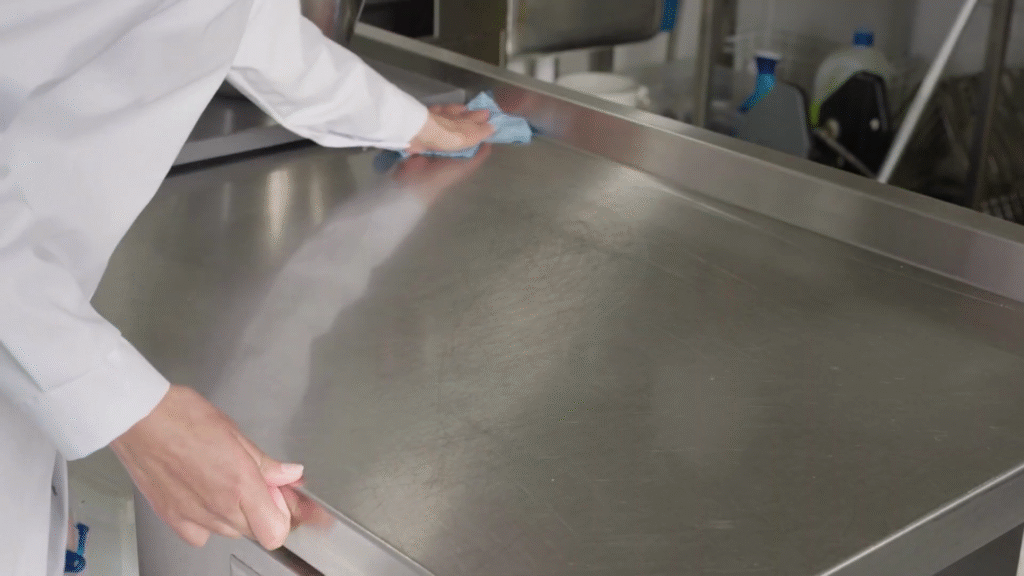
When preparing food for a food-hypersensitive customer, use a clean preparation area and clean equipment.
7. Be clear and honest about any remaining risk
Even with good controls in place, some environments cannot guarantee that cross-contamination will never happen.
If that’s the case, it’s important to communicate this clearly.
This allows the customer to make an informed decision about whether to go ahead with their order.
8. Make sure you and your team are properly trained
Having the right information in place is only part of the picture.
You also need to make sure that anyone involved in preparing, handling or selling food understands how to manage allergens properly.
This includes:
- Knowing what to do when a customer declares a food allergy or intolerance
- Understanding how to check allergen information accurately
- Being aware of cross-contamination risks and how to prevent them
- Knowing what to do if something goes wrong
Even in a small setup, it’s important that everyone is clear on their role and responsibilities.
If you’re running the business on your own, this still applies to you. You need to feel confident in your processes and decisions.
If you have a team, training in allergens should be consistent and regularly refreshed..
When everyone understands the “why” behind allergen controls, they’re much more likely to follow them properly in practice.
Check out the Level 2 Food Allergen Awareness and Level 3 Food Allergen Management courses.
Want to learn more? Check out The Ultimate Allergen Management Guide for Foodservice and Hospitality Businesses.